One year after my wedding day, almost to the date, my phone lit up with a notification. The caption read simply, “Family comes first. ”
Stick with me while I share my story. And if it touches you, don’t forget to support our channel by hitting that subscribe button, dropping a like, and sharing it with the people you care about.
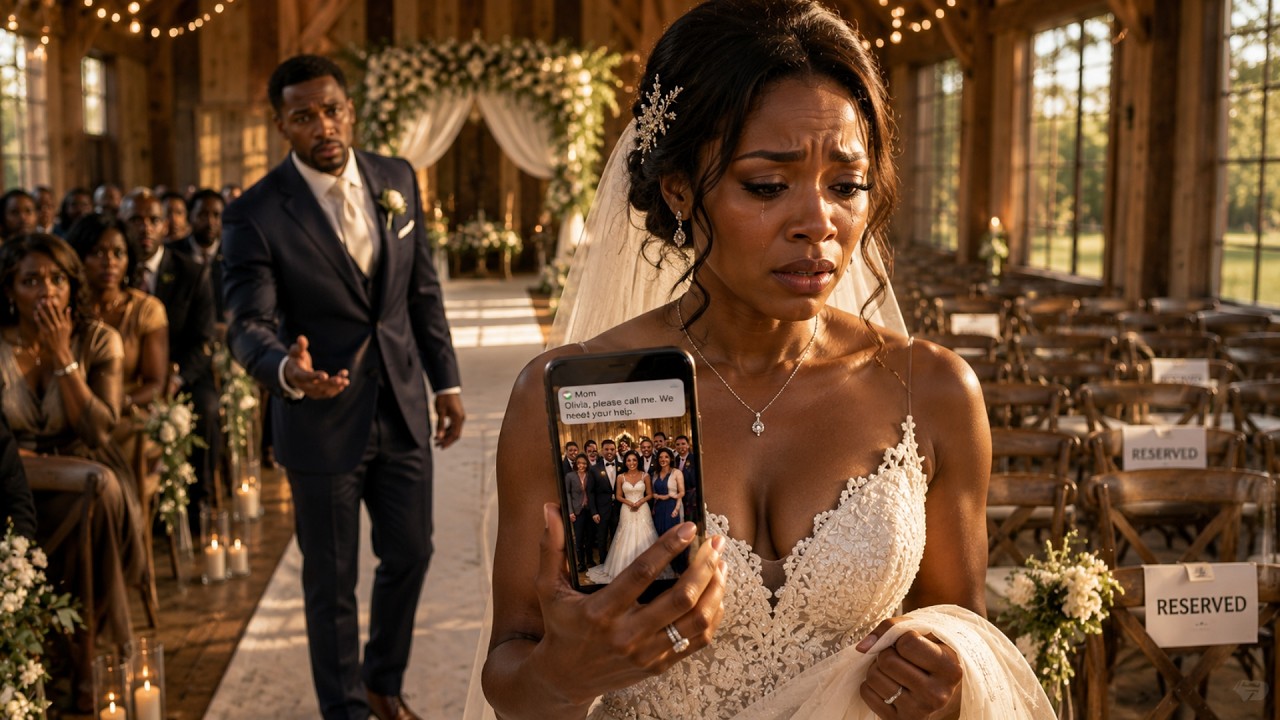
A career built on exactly the skills that I had for most of my life also defined my role within my own family. I did it all for years without much complaint, operating under a quiet, mostly unexamined belief that if I kept showing up consistently enough for everyone else, eventually they would show up for me, too, when it mattered most. It took losing something enormous to finally understand how mistaken that assumption had been. I think, if I’m honest, some part of me always suspected the assumption was shaky, even in those earlier years, but questioning it directly felt riskier than simply continuing to hope it would eventually prove true.
My husband, Daniel, saw the pattern in my family long before I was ready to admit it existed. He never once pressured me to cut anyone off or dramatically confront the pattern before I was ready. Instead, he simply made small observations, gently phrased, and let me sit with them. “Your family doesn’t really show up for you, do they?
” he asked once, early on, and I remember deflecting with a laugh and a quick change of subject. It took my own wedding day to finally understand exactly what he meant. Breanna herself, my cousin, isn’t a villain in any straightforward sense, and I think that’s important to say plainly. She’s 29, beautiful, charismatic, the kind of person who has simply never had much reason to question why everyone around her seems always willing to rearrange their own lives to accommodate hers.
She didn’t invent the favoritism that shaped so much of our family dynamic, she simply grew up inside it, comfortably, without ever needing to notice the shape of the water she was swimming in. My aunt Denise, Breanna’s mother, has always been the one most actively reinforcing the comparisons between us, the one most likely to say things like, “Breanna’s wedding only happens once,” as if the same could not be said for mine. I can still remember hearing that exact phrase at a family barbecue years before any of this happened, some minor scheduling conflict involving a graduation party, and feeling even then a small, unnamed discomfort at how easily everyone around the table simply nodded and moved on. When Daniel proposed six months before everything I’m about to describe happened, I felt something close to pure uncomplicated joy mixed with a hope I hadn’t fully let myself acknowledge before.
I dreamed of having my family genuinely present for this particular milestone. I kept the wedding relatively modest, intentionally wanting the focus to stay on the people I loved rather than on any kind of extravagant production. I personally invited everyone myself, calling rather than simply mailing invitations, wanting each conversation to feel warm and direct. My mother’s response was immediate and reassuring.
She told me she wouldn’t miss it for the world, that her baby girl was finally getting married, that she would help in any way she could. Then Breanna announced her own engagement only a few weeks after mine, and I watched slowly, and with a growing sense of unease, as the family’s attention shifted almost entirely in her direction. Suddenly, every conversation revolved around her venue, her dress, her guest list, her vision for the day. My own planning conversations became shorter, more distracted.
“Breanna’s wedding only happens once,” they’d say, with an urgency that never seemed to apply in quite the same way to anything happening in my own life. Both weddings, mine and Breanna’s, ended up scheduled for the exact same Saturday. I remember the knot in my stomach when I realized the conflict, and I remember telling myself it would be fine, that surely we could coordinate, that everyone would find a way to celebrate us both. I should have known better.
A week after the date was announced, my mother called me. Her voice was soft, gentle, almost apologetic, but the words she spoke landed like stones. “Honey, I hope you understand. We’ve decided to go to Breanna’s wedding instead.
It just makes more sense, with everything she’s planning. You understand. ”
I remembered the specific, disorienting shock of that sentence landing, the casual way she’d ranked the relative importance of our two weddings as though it were simply an obvious, uncontroversial fact rather than a devastating judgment about how she valued each of us. I laughed awkwardly, genuinely uncertain how else to respond in that moment.
Then, after a pause I still remember clearly, she added, “You have Daniel. You’ll be fine. Breanna needs us more right now. ”
I tried over the following weeks everything I could think of to salvage some version of my family’s presence at my wedding.
I offered to move the ceremony later in the day so they could attend the morning portion of Breanna’s event, then drive to mine in the afternoon. No. I asked if they might be able to make it to my reception instead, even if they missed the ceremony itself. Still no.
Each request was met with the same patient, almost pitying explanation: Breanna needed them, Breanna’s day was bigger, Breanna’s moment had somehow become the only moment that mattered. My father, when I raised how much all of this was hurting me, told me simply, “Don’t make this bigger than it is. ” I’ve thought about that sentence often since. He meant, I think, that I should accept quietly, that my disappointment was an inconvenience, that the family’s choice had been made and my role was to absorb it and move on.
What he never understood, what none of them understood, was that they were the ones who had made it bigger, by refusing to see that my day mattered just as much as hers. The morning of my wedding, I woke up in a hotel room where I’d chosen to stay the night before, needing some space to prepare, to calm the trembling in my hands. I remember the bright sunlight streaming through the curtains, the absurdly beautiful weather, as though the universe itself was trying to convince me that everything would be fine. I called my mother that morning, one last attempt, one final plea.
She didn’t answer. Neither did my father. Neither did my brother. I left messages, simple and calm, telling them I hoped they’d changed their minds, that the ceremony would be at four, that they’d always be welcome.
None of them ever responded. I want to be honest that I don’t remember every detail of that walk with perfect clarity. The walk down the aisle toward Daniel, the man who had seen the whole pattern in my family from the beginning and had chosen me anyway, remains in my memory mostly as a blur of color and light. What I do remember with startling vividness is the faces in the crowd.
I remember my best friend, Maya, squeezing my hand tightly just before the music started, having noticed the exact moment I registered which seats were empty. I remember the back row, filled not with aunts and uncles and cousins, but with friends I’d made in law school, colleagues from work, Daniel’s parents, who had flown in from across the country and who were crying openly and unashamedly, the exact same afternoon they told me they simply couldn’t make my own celebration work. I remember looking at Daniel’s family and seeing people who had genuinely chosen to be there, who had rearranged their own schedules and traveled considerable distances simply because celebrating with us mattered to them. That moment, more than almost anything else that happened that day, became the quiet beginning of a transformation I wouldn’t fully understand until much later.
I looked at his mother, a woman who had known me for barely two years, and I saw the mother I had always wished my own mother could be, fully present, fully joyful, asking nothing from me except the chance to witness my happiness. I looked at his father, a quiet man who had shaken Daniel’s hand firmly that morning and told him, “You found a good one. Don’t let her go. ” And I realized, slowly, with the kind of clarity that only arrives in moments of profound emotional shock, that my life was not defined by who had failed to show up.
It was defined by who had. Daniel’s parents gave a toast at the reception that I have replayed in my mind a thousand times since. His mother stood up, tapped her glass, and looked directly at me. “I always wanted a daughter,” she said, her voice thick with emotion.
“And today, with all my heart, I feel like I got one. ” I cried then, openly and without shame, not because I was sad about my own family’s absence, but because I had never realized how deeply I had been starving for that kind of unconditional acceptance. My own mother had spent years making me feel like my needs were an inconvenience, like my accomplishments were somehow in competition with my cousin’s, like my entire worth was contingent on how much I was willing to sacrifice. Daniel’s mother, a woman who owed me nothing, gave me the gift of simply being seen, without any conditions attached.
For a while, my family barely seemed to notice the shift at all, which in its own painful way told me almost everything I needed to know about how automatic and unexamined my role in their lives had actually become. I stopped calling. I stopped offering to host holiday dinners. I stopped rearranging my work schedule to accommodate last-minute requests to pick someone up from the airport or watch someone’s kids or help someone move on a Saturday morning.
And for a full month, almost no one reached out to ask why. The silence was loud. It was the loudest silence I had ever heard. Daniel and I bought our first home together not long after that, a modest but genuinely ours house in a quiet neighborhood we both loved immediately.
I remember standing in the empty living room on the day we got the keys, the afternoon light streaming through the big front windows, and feeling something I had never quite experienced before. This was mine. This was ours. This wasn’t built out of obligation or guilt or the quiet desperation of trying to keep peace with people who would never be at peace anyway.
This was mine, chosen deliberately, built on my own terms, with no invisible obligation attached to it. I started a weekly coffee with Daniel’s mother on Saturday mornings, a ritual we both came to treasure. She told me stories about Daniel as a boy, his stubbornness, his sweetness, the way he’d once brought home a stray dog and hidden it in his closet for three days until his parents found out. I told her about my own childhood, about the feeling of always being second, about the quiet ache of never quite measuring up.
She listened without judgment and then said something I will never forget: “Their loss, sweetheart. Their loss. ” Those two words, so simple and so warmly offered, undid something in me. I sat across from her, tears streaming down my face, and I finally let myself believe that I was worthy of the kind of love that didn’t require me to make myself smaller.
Those Saturday mornings became something I genuinely looked forward to, small, consistent proof that relationships could exist without constant maintenance on my part, that people could simply show up reliably without needing to be chased or managed into doing so. Exactly one year after my wedding day, almost to the date, my phone rang. I remember staring at my mother’s name on the screen for a long moment before finally answering, some old familiar reflex still pulling me toward picking up despite everything that had happened. Her voice was strained, taut with the kind of anxiety I’d rarely heard in her before.
She asked how I was. I told her I was fine. Then she got to the point. It turned out that the family business, the one my grandfather had started and my father and aunt had taken over years ago, had hit a serious crisis.
There had been embezzlement, a trusted longtime employee who had been quietly siphoning funds for years, and the financial damage was severe. They needed legal help. They needed organizational expertise. They needed someone who understood how to navigate complex financial recovery.
And here was the detail that made the entire call make sense to me once my mother finally got to it. Because of my career, my professional connections, and the specific kind of financial and organizational expertise I’d built over years in my field, I was uniquely positioned to actually help resolve the situation in a way nobody else in the family could. “You’re the only person who can help us,” she said. And she meant it as a compliment, as if it should have been obvious to me how much they valued me.
But I heard something else in those words. I heard, “You’re the only person who has always been able to fix things for us, so we need you to do it again. ” I sat with that sentence for a long moment before responding, turning it over slowly, understanding with a clarity that felt almost unbearable exactly what it revealed about how my family had always actually seen me. They weren’t calling because they missed me, or because a year of distance had made them recognize what they’d lost.
They were calling because they needed something specific that I happened to have. “Mom,” I said slowly, genuinely curious what her answer might be, “if I hadn’t been able to help you with this, would you still be calling me right now? ” There was a long silence on the other end of the line before she finally said, “Because we knew you’d know what to do. ” That single sentence, more than anything else in that entire phone call, exposed the whole shape of my family’s relationship with me, more completely and more painfully than any argument or confrontation could have managed on its own.
They had never seen me as a daughter who deserved their presence. They had only ever seen me as a solution to a problem, a resource to be tapped, a safety net they assumed would always be waiting beneath them. I agreed to meet with them anyway. Not because I felt obligated, but because I realized that still carrying the anger would only weigh me down, and because I had learned, in the past year, that boundaries could be compassionate for everyone involved.
I sat across from my parents, my aunt, and Breanna in my childhood living room, the same room where so many conversations had been had about why Breanna’s needs mattered more than mine. I never raised my voice when we sat down together. I spoke quietly and clearly, walking them through the legal options available, the steps they needed to take, the professionals they needed to contact. I didn’t insert myself directly into fixing every detail of the unraveling business arrangement.
Instead, I used my professional knowledge to point her and the rest of the family toward legitimate, sustainable solutions that they could implement themselves. Breanna looked overwhelmed, her usual confidence stripped away. “I don’t know how to do any of this,” she admitted, her voice small in a way I’d never heard before. I recognized something in that admission, a kind of helplessness that comes from never having to develop certain skills because someone else had always quietly handled things instead.
I walked her through the folder instead, step by step, making sure she understood each piece before moving to the next, treating her the way I would have wanted someone to treat me, capable of learning rather than needing to be rescued. Afterward, my mother pulled me aside. She was crying, tears streaming down her face, and for a moment she looked older, smaller, less like the woman who had always been able to dismiss my hurt with a wave of her hand. “I’m so sorry,” she whispered.
“We never meant to hurt you. We just always assumed you’d be okay. We kept thinking you’d always understand. ” I’ve thought about that sentence often since, because I think it captures something important, not just about my own family, but about a pattern that plays out in a lot of families where one person quietly absorbs more than their fair share.
“We kept thinking you’d always understand. ” As if my understanding was an infinite resource, something to be drawn upon indefinitely without ever being replenished. “I understand more than you think,” I told her. “I understand that you knew, without any doubt, that I would always be there for you.
But you never once believed you needed to be equally there for me. That’s not love, Mom. That’s not what family means. ” My mother sat with that for a long moment, and I watched something shift in her expression, something that looked for the first time in longer than I could remember like genuine understanding, rather than simple discomfort at being confronted with the truth.
She didn’t argue. She didn’t try to defend herself. She just nodded slowly and said, “You’re right. I think I’ve always known that.
I just didn’t know how to stop it. ”
Breanna, too, eventually reached out to apologize, admitting, somewhat haltingly, that she’d never really questioned why the family always seemed to choose her, why her needs had always somehow taken precedence over mine, without either of us ever fully discussing why that pattern existed in the first place. We had lunch together a few weeks later, shy and awkward at first, then gradually more honest. She asked me questions about my wedding, about Daniel, about the life I’d built.
She listened without interrupting. She didn’t try to defend or explain away what had happened. She just let me tell my story, and something in that simple act of being heard finally healed the last wounded place I’d been carrying since that Saturday afternoon. In the months that followed, our relationship transformed.
She started asking for my advice on things that actually mattered, not just the practical logistics of her life but about how to be a better person, a better daughter, a better friend. She started standing up to her own mother when Aunt Denise made careless comments about my choices. She started showing up, consistently, without being asked, without needing me to manage her participation in my life. A relationship that feels more equal than anything we had growing up, built on actual conversation, rather than the old unspoken assumption that I would simply orbit around whatever she needed.
I forgave my family in the months that followed all of this. I want to be clear about that, because I don’t think this story is really about permanent estrangement or dramatic revenge. But forgiveness, I’ve learned, doesn’t have to mean returning automatically to exactly the same dynamic that existed before. Forgiveness means releasing the anger so it stops weighing on me.
It doesn’t mean pretending that what happened didn’t hurt. It doesn’t mean handing over another piece of myself in the hope that this time they’ll finally see me. These days, a little over a year and a half past my original wedding day, Daniel and I sit most evenings in the home we bought together, surrounded by photographs from that day. In one of them, we’re laughing during our first dance, his hand on my back, his forehead against mine, the world reduced to just the two of us.
In another, Daniel’s mother is hugging me so tightly that my eyes are squeezed shut, both of us crying and laughing at the same time. Sometimes, when I catch sight of those photographs from across the room, I still feel a small echo of that old wedding day ache, but it no longer defines how I understand my own worth, the way it once so completely did. For a long time, I believed that family simply meant the people who happened to share your last name, the people you were obligated by blood alone to keep showing up for indefinitely, regardless of whether that effort was ever returned. I know better now.
Family, real family, is the people who show up. The people who choose you, not out of obligation or guilt, but because being part of your life is a gift they treasure. The people who make room for you, not because you demanded it, but because they can’t imagine a world where you’re not there. My family skipped my wedding because they believed, without ever really examining that belief, that I would always simply understand that my patience would stretch indefinitely to accommodate whatever they needed from me.
And in doing so, they taught me the most valuable lesson I have ever learned, that love that must always be earned, again and again and again, without ever once being offered in return, is not love at all. It’s a transaction. And I was done making myself small to purchase their affection. I was done accepting crumbs when Daniel’s family had shown me, freely and without reservation, exactly what it felt like to be the center of someone’s world.
I don’t tell this story to punish my family. I tell it because I know there are people out there right now, sitting in the exact same quiet ache I used to live in, believing that if they just try a little harder, give a little more, stretch their patience a little further, they might finally be enough for the people who refuse to see them. And I want you to know something. They are never going to see you.
Not because you’re not enough, but because they refuse to see, and that is not your burden to carry. Your worth was never dependent on their willingness to show up. You have been worthy this whole time, regardless of who could or couldn’t make it to the wedding.
If this story touched your heart, don’t forget to hit that subscribe button, drop a like, and share it with someone who might need to hear it today.